
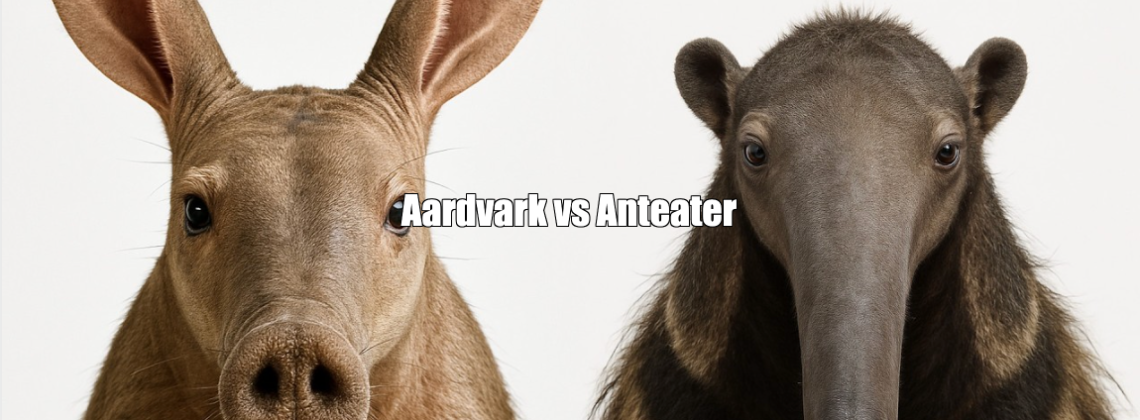
Aardvark vs Anteater
Summary
Pros
Aardvark – Pros ✅
- Excellent digger; makes deep burrows for shelter
- Very good at eating termites and helping control them
- Unique animal, only member of its group
Anteater – Pros ✅
- Very long, sticky tongue for catching ants and termites
- Strong front claws for opening nests and defense
- Striking look; easier to see in zoos and wildlife shows
Cons
Aardvark – Cons ❌
- Hard to see (nocturnal and shy)
- Not very colorful or flashy
- Lives only in Africa
Anteater – Cons ❌
- Needs special habitat and diet
- Can be dangerous if threatened
- Lives only in Central and South America
When people search for “aardvark vs anteater”, they often think these two animals are almost the same. Long nose? Yes. Eat ants and termites? Yes. But they are not closely related, and each one is “better” at different things.
The aardvark gets its name from a South African word significance “earth pig.” Although the aardvark appears like a pig, particularly with its body and snout, aardvarks really share typical forefathers with elephants and golden moles. Aardvarks live throughout much of sub-Saharan Africa.
Anteaters are the 4 extant mammal types in the suborder Vermilingua (significance ‘worm tongue’), typically understood for consuming ants and termites. The private types have other names in English and other languages. Together with sloths, they are within the order Pilosa. The name “anteater” is likewise typically used to the aardvark, numbat, echidnas, and pangolins, although they are not carefully associated to them.
Below is a simple, human-style comparison to help you decide which one you like more.
My Aardvark vs Anteater Comparison Table
Aardvark vs Anteater Comparison Table
| Feature | Aardvark | Anteater (Giant anteater focus) |
|---|---|---|
| Scientific group | Mammal, order Tubulidentata (very unique) | Mammal, order Pilosa (related to sloths) |
| Where they live | Africa | Central and South America |
| Main food | Termites and ants | Ants and termites |
| Size | Medium: about a small pig | Giant anteater can be larger than a big dog |
| Snout / nose | Pig-like snout, good for sniffing | Long, narrow tube-shaped snout |
| Teeth | Has strange, tube-like teeth | No teeth at all |
| Tongue | Long, sticky tongue | Very long, sticky tongue (up to 60 cm / 2 ft) |
| Activity time | Mostly night (nocturnal) | Mostly day (diurnal) |
| Defense | Strong digging claws, can dig fast | Huge front claws, powerful swipe |
| Tail | Thick, not very fluffy | Long, bushy tail (especially in giant anteater) |
| Looks | Like a mix of pig and kangaroo | Very striking, long snout, bold fur patterns |
| Domestic pet potential | Very poor choice | Also a very poor choice |
| Best known for | Amazing digger, termite hunter | Famous zoo animal, dramatic appearance |
What is Aardvark?
The aardvark is a strange-looking animal from Africa. Its name comes from Afrikaans and means “earth pig,” and that fits it well.
aardvark, (Orycteropus afer), stocky African mammal discovered south of the Sahara Desert in savanna and semiarid locations. The name aardvark– Afrikaans for “earth pig”– describes its piglike face and burrowing routines. The aardvark weighs as much as 65 kg (145 pounds) and determines up to 2.2 metres (7.2 feet) long, consisting of the heavy, 70-cm (28-inch) tail. The face is narrow with an extended snout, really minimized eyes, and ears approximately 24 cm (9.5 inches) long. The aardvark’s coat is little and yellow-colored gray; the face and tail suggestion might be whitish. The 4 toes on the front foot (5 on the hind feet) are geared up with strong, flattened nail-like “hooves” looking like spades.
Key features of an aardvark:
- Lives in many parts of Africa, mostly in savanna and grassland
- Digs huge burrows underground
- Comes out mostly at night
- Eats mainly termites and some ants
- Has thick skin and strong claws
What makes aardvarks special
- Super digger:
- Can dig very fast to escape danger
- Creates deep burrows that other animals later use for shelter
- Survival skills:
- Good sense of smell to find termite nests
- Can travel far at night looking for food
- Unique family tree:
- The aardvark is the only living member of its order (Tubulidentata)
- This makes it a very unique animal in the mammal world
Pros of aardvarks
- Excellent at controlling termites in their area
- Strong burrow makers that help shape their ecosystem
- Very tough and well adapted to dry African lands
Cons of aardvarks
- Hard to see (they are nocturnal and shy)
- Not very flashy or colorful
- Not easy to study or observe in the wild
What is Anteater?
When people say “anteater,” they often mean the giant anteater, the biggest and most famous species. There are also smaller species like the tamandua and silky anteater.
anteater, (suborder Vermilingua), any of 4 types of toothless, insect-eating mammals discovered in tropical savannas and forests from southern Mexico to Paraguay and northern Argentina. They are long-tailed animals with lengthened skulls and tubular muzzles. The mouth opening of the muzzle is little, however the salivary glands are big and produce sticky saliva onto a wormlike tongue, which can be as long as 60 cm (24 inches) in the huge anteater. Anteaters live alone or in sets (typically mom and offspring) and feed generally on ants and termites.
They record their victim by placing their tongues into insect nests that they have actually torn open with the long, sharp, curved claws of their front feet; the claws are likewise utilized for defense. Huge anteaters and the smaller sized tamanduas utilize their hind legs and tail as a tripod when threatened, which therefore releases the front limbs to slash at assaulters.
The aardvark excavates branching burrows, generally 2– 3 metres long however often as much as 13 metres, with numerous sleeping chambers. It deserts old burrows and digs brand-new ones regularly, which thus offers dens utilized by other types such as the African wild pet (Lycaon pictus). The aardvark’s diet plan consists practically totally of ants and termites.
During the night it takes a trip 10– 30 km (6– 19 miles), ambling along familiar courses in a zigzag style, stopping briefly often to smell and push its snout versus the soil. Fleshy sensory organs on the nasal septum most likely spot small underground motions. With its strong claws the aardvark can quickly open a cement-hard termite mound.
The nostrils are squeezed shut to stay out flying dust. The sticky tongue, reaching 30 cm (almost 12 inches) from the little mouth, is then utilized to lap up the pests. A thick conceal secures the aardvark from insect bites and stings. If threatened while away from a safeguarding burrow, an aardvark can dig its escape of sight in 5 minutes. An intense sense of hearing safeguards it from being amazed by predators, that include pythons, lions, leopards, and hyenas. If a predator attempts to dig it out of its burrow, the aardvark quickly moves soil to obstruct the tunnel behind itself. When assaulted it slashes with its powerful front claws.
Key features of anteaters (giant anteater):
- Lives in Central and South America
- Long, tube-shaped snout
- Very long, sticky tongue for licking up ants
- No teeth at all
- Long, bushy tail and striking fur pattern
What makes anteaters special
- Extreme tongue power:
- Tongue can be up to about 60 cm (2 feet) long
- Can flick tongue in and out very quickly to grab many ants
- Strong claws:
- Big front claws for ripping open ant nests
- Also used for defense, with a powerful swipe
- Daytime animal:
- Often active during the day, easier to see
- Common in zoos and wildlife documentaries
Pros of anteaters
- Very eye-catching and memorable appearance
- Good natural pest controllers (ants and termites)
- Easier to watch and photograph than aardvarks
Cons of anteaters
- Still wild animals, not suitable as pets
- Need special habitat and diet
- Can be dangerous if they feel threatened
Aardvark vs Anteater: Key Differences
Here are the main ways to tell them apart and see which is “better” at what:
- Location
- Aardvark: Only in Africa
- Anteater: Central and South America
- Family and relatives
- Aardvark: Only member of its order, very unique
- Anteater: Related to sloths and armadillos
- Body shape
- Aardvark:
- Pig-like body
- Shorter snout
- Thick, strong body built for digging
- Anteater (giant):
- Long, narrow snout
- Long fur and big, fluffy tail
- More “dramatic” body shape
- Aardvark:
- Teeth
- Aardvark: Has unusual, tube-like teeth
- Anteater: No teeth at all
- Lifestyle
- Aardvark:
- Night animal
- Spends a lot of time underground in burrows
- Anteater:
- Often active during the day
- Spends more time walking in open areas
- Aardvark:
- Defense style
- Aardvark: Digs fast to escape or hide
- Anteater: Uses large claws for defense if cornered
Now Which Is Better: Aardvark or Anteater?
The big question of “aardvark vs anteater – which is better?” does not have a perfect, scientific answer. It depends on what “better” means to you. But we can compare in a few simple ways.
1. Better digger
- Winner: Aardvark
- Aardvarks are amazing diggers.
- They build deep burrows that protect them from heat and predators.
- Other animals later use these burrows too.
2. Better pest controller (ants and termites)
- Draw (both win in different ways)
- Aardvark: Focuses more on termites, especially in hard African soil.
- Anteater: Great at eating ants and termites in open fields and forests.
Both help control insect numbers in their own habitats.
3. Better to see and enjoy (for humans)
- Winner: Anteater
- Easier to see in the wild and in zoos
- Very striking look: long snout, colorful fur, huge tail
- More often shown in TV shows, books, and cartoons
If you are thinking as a wildlife watcher or zoo visitor, anteaters are usually more visible and exciting.
4. Better survivor in tough land
- Winner: Aardvark
- The aardvark has survived in harsh African habitats with little water.
- Its digging skills and night lifestyle help it stay cool and safe.
- Being the only member of its group and still surviving is impressive.
5. Overall “wow” factor
- Winner: Depends on your taste
- Aardvark:
- Quiet, secretive, “underground engineer”
- Cool if you like unique, rare animals
- Anteater:
- Bold, strange, and unforgettable
- Cool if you like animals that look dramatic
- Aardvark:
My Final Verdict: Aardvark vs Anteater
If we must choose a single “winner” in the aardvark vs anteater battle, here is a simple view:
- Best all-round survivor and ecosystem engineer: Aardvark
- Best animal to watch, draw, or show to friends: Anteater
If I had to choose one overall “better” animal for most people, I would say:
- The anteater is “better” for humans to enjoy and learn about, because:
- It is more visible and easier to observe
- It has a very dramatic, memorable look
- It appears often in zoos and media
But in terms of pure survival skills and unique place in nature, the aardvark is also amazing and perhaps even more special scientifically.
Quick Summary in Bullet Points
- Both eat ants and termites, but they live on different continents.
- Aardvark
- From Africa
- Night animal
- Super digger
- Very unique in evolution
- Anteater
- From Central and South America
- Day animal (mostly)
- Very long tongue, no teeth
- Strong claws and bold appearance
So, in the end, aardvark vs anteater is not about who is absolutely better. It is about what you value more:
- Love unique, hidden, night-time diggers? → Aardvark
- Love eye-catching, strange, showy animals? → Anteater
Either way, both are wonderful examples of how animals can evolve to live off tiny insects and still be powerful and special.
Anteaters become part of the Xenarthra superorder, a once varied group of mammals that inhabited South America while it was geographically separated from the intrusion of animals from North America. The other living animals in the household are the sloths and the armadillos.
Based upon his research study of fossils, Bryan Patterson has actually concluded that early family members of the aardvark appeared in Africa around completion of the Paleocene. The ptolemaiidans, a mystical clade of mammals with unsure affinities, might in fact be stem-aardvarks, either as a sis clade to Tubulidentata or as a grade causing real tubulidentates.